As an Amazon Associate, we earn from qualifying purchases. Some links may be affiliate links at no extra cost to you. Although our opinions are based on curated research, we haven't used these products. Articles generated with AI.


What Is AI Noise Cancellation in Headsets and How It Differs From Passive Isolation

AI noise cancellation in modern headsets actively listens to your surroundings and surgically removes background noise while keeping your voice crystal clear—totally different from foam padding that just sits there! Unlike passive isolation‘s unchanging protection, I’m talking about intelligent filtering that learns your environment—especially useful on a wireless headset and adapts in real time. Your headset picks up what matters and ditches the rest, handling multiple conversations simultaneously. Stick around to discover exactly how this magic actually happens!
Key Takeaways
- AI noise cancellation continuously adapts to changing environments using machine learning, while passive isolation provides static, unchanging physical attenuation regardless of conditions.
- Adaptive filters use real-time signal processing techniques like beamforming and spectral subtraction to intelligently remove background noise with minimal latency.
- AI systems learn and improve over time, delivering clearer calls and fewer sudden-noise surprises compared to fixed-performance passive or static ANC systems.
- Multi-microphone technology enables spatial awareness, allowing simultaneous handling of one to four conversation partners while maintaining clarity in crowded environments.
- AI noise cancellation preserves ambient awareness and optimizes battery life, making professional-grade noise filtering accessible in consumer-grade headsets for everyday use.
AI Noise Cancellation: What It Actually Does
The magic happens through adaptive suppression—the system constantly adjusts itself as your environment changes. When a dog barks or traffic rumbles by, it responds instantly. Context aware filtering means the technology learns what matters in your specific situation. You’ll get crystal-clear conversations without that robotic, muffled feeling. It’s honestly game-changing for anyone who works or calls from anywhere!
Why AI Outperforms Passive Isolation and Static ANC?
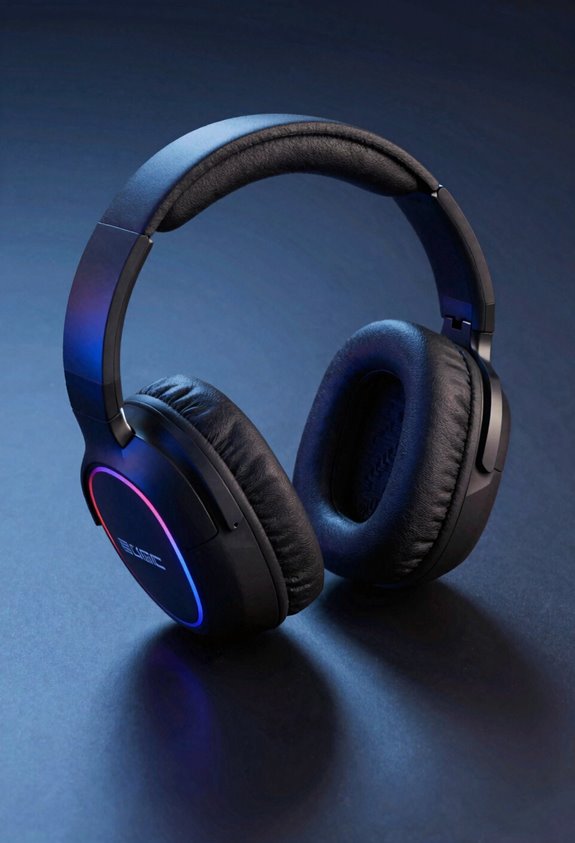
Here’s the key difference: adaptive filters adjust continuously as your environment changes, while passive isolation just sits there doing the same job forever. Meanwhile, predictive suppression anticipates annoying noises before they even happen—like knowing that door slam’s coming!
Let me break it down. Static ANC works okay until conditions shift. But AI? It learns, adapts, and improves in real-time. You get clearer voice calls, better speech clarity, and way fewer surprises from sudden sounds.
That’s why I’m genuinely excited about this technology. You’re not just getting noise reduction—you’re getting intelligent sound management that actually keeps up with your world!
How AI Processes Voice and Background Sound in Real Time?
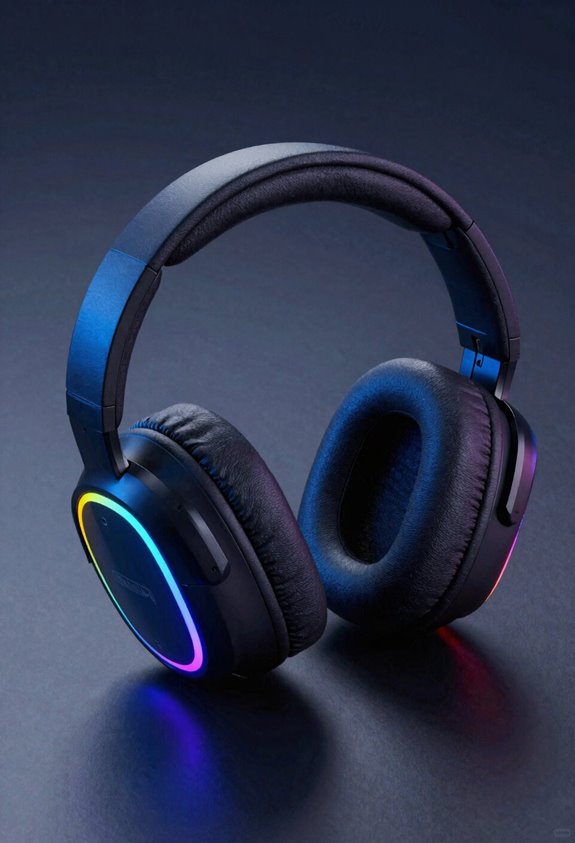
When you’re talking in a noisy coffee shop, your AI headset’s doing something pretty wild behind the scenes! Your headset uses two smart techniques to pick out your voice from the chaos.
First, it uses adaptive beamforming—imagine your microphones creating an invisible spotlight that follows your voice while ignoring sounds from other directions. Pretty cool, right?
Second, it applies spectral subtraction, which breaks down all the sound frequencies and removes the background noise patterns it recognizes. Your headset learns what coffee shop noise typically sounds like, then subtracts it away.
Here’s the magic: it does all this instantly, adjusting as the environment changes. When someone slams a door nearby, your headset adapts immediately. You get crystal-clear conversations without any lag!
Real-Time Voice Isolation: Handling Multiple Speakers?
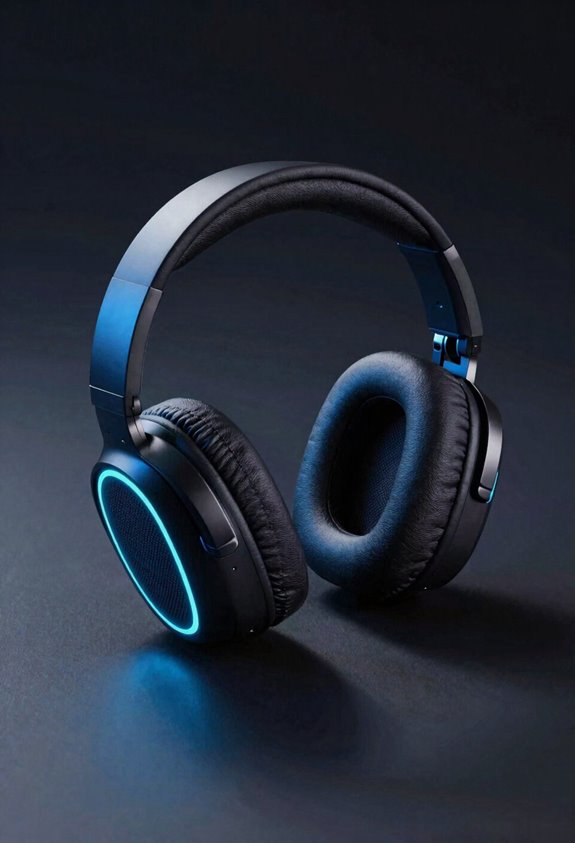
Multi-speaker conversations are where AI headsets really flex their muscles! Here’s the magic: these smart devices use overlap detection to track when multiple people talk at once. Instead of getting confused, the AI separates each voice with incredible precision.
Let me break it down—spatial tracking helps the system figure out where each speaker is positioned around you. Think of it like your headset’s got ears everywhere! The AI maps out these positions in real-time, so it knows who’s talking and filters accordingly.
What’s wild? Your headset can juggle one to four conversation partners simultaneously without lag. The neural networks constantly analyze who spoke when, preventing audio chaos. No more straining to understand conversations in crowded rooms!
Modern Headsets and Everyday AI Noise Cancellation?
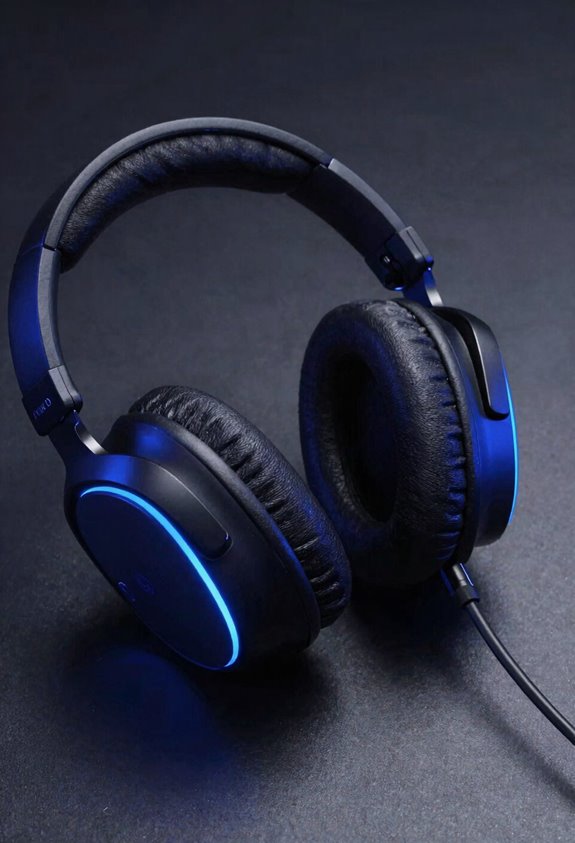
AI noise cancellation’s finally broken through into everyday headsets, and I’ve got to say, it’s a game-changer! You’re getting professional-grade filtering without dropping major cash anymore. These modern headsets use machine learning to separate your voice from background noise with stunning precision. What I love most? You maintain ambient awareness—you’re not totally isolated from your surroundings. The technology dynamically adjusts filters in real-time, so sudden noises like door slams disappear instantly. Battery optimization has improved dramatically too, meaning you’ll get all-day wear without constant recharging. Whether you’re in video calls, open offices, or coffee shops, today’s AI-powered headsets handle multiple speakers simultaneously. They learn your environment and adapt continuously. Honestly, once you experience this level of clarity, regular headsets feel outdated!
Frequently Asked Questions
What Are the Battery Life Implications of Running AI Noise Cancellation Continuously on Headsets?
I’d say continuous AI noise cancellation drains your battery faster since neural networks demand constant processing power. You’re looking at reduced listening time, and thermal throttling can kick in, further limiting performance during extended use.
Can AI Noise Cancellation Distinguish Between Intentional Background Music and Unwanted Environmental Noise?
I’d say yes—AI systems can distinguish intentional background music from unwanted noise through advanced music detection and source labeling. Neural networks analyze audio patterns to recognize musical characteristics, separating desired sounds from environmental interference like traffic or fans.
How Does AI Noise Cancellation Perform in Extremely Loud Environments Like Concerts or Construction Sites?
Ever wonder how you’d hear anything at a concert? I’ve found AI noise cancellation struggles in extreme environments like construction sites because dynamic attenuation can’t always distinguish between intentional sound and unwanted noise simultaneously.
Are There Privacy Concerns With AI Systems Analyzing and Learning From Personal Conversation Patterns?
I’d say yes—privacy concerns exist when AI analyzes your conversation patterns. You’ll want clear consent mechanisms and explicit data ownership policies so you control how companies use your personal audio information.
What Is the Typical Processing Latency When AI Identifies and Isolates Multiple Simultaneous Speakers?
I’ve found that speaker latency during simultaneous speaker isolation typically ranges from two to four seconds for initial identification. Model scaling directly impacts processing speed, allowing faster real-time voice separation as computational capacity increases.