As an Amazon Associate, we earn from qualifying purchases. Some links may be affiliate links at no extra cost to you. Although our opinions are based on curated research, we haven't used these products. Articles generated with AI.


The Science Behind Armrest Height and Its Effect on Shoulder Tension

Your armrests on a gaming chair are quietly making or breaking your shoulders! When they’re too high, they force your shoulders into a constant shrug, activating your upper trapezius and creating those pesky neck knots. Too low? Your arms dangle, and your shoulders collapse into slouch mode. On an ergonomic chair, the sweet spot is about 0–2 cm below your bent elbows at 90 degrees—this keeps your shoulders relaxed and your spine happy. Get this right, and you’ll notice the difference immediately. Stick around to discover exactly how to nail this setup and crush that tension for good.
Key Takeaways
- High armrests force sustained shoulder elevation, activating upper trapezius muscles and creating tight, achy knots.
- Low armrests cause arms to dangle, forcing neck and shoulder muscles to support limb weight unsupported.
- Optimal armrest height places elbows at 90–100 degrees, 0–2 cm below bent-elbow position for relaxation.
- Misaligned armrests contribute to chronic pain through sustained muscle strain and potential nerve compression over time.
- Proper armrest height reduces shoulder muscle activity, decreasing neck tension and promoting neutral spine alignment.
How Armrest Height Affects Your Shoulder Muscles
When your armrests sit too high, your shoulders literally shrug up to meet them—and that’s where the trouble starts! I’m talking about your upper trapezius and levator scapulae muscles working overtime just to keep your arms supported. Your body’s postural proprioception—that’s your built-in sense of where your body is in space—gets confused when armrests force awkward positioning. This messes with your shoulder biomechanics, the way your shoulder joints actually move and function. Let me be straight with you: those tight, achy knots in your shoulders and neck? That’s sustained muscle tension from fighting against badly positioned armrests. Over time, this creates stiffness that lingers even after you leave your desk. The solution? Adjust those armrests so your shoulders can finally relax!
What Happens When Armrests Are Too High?
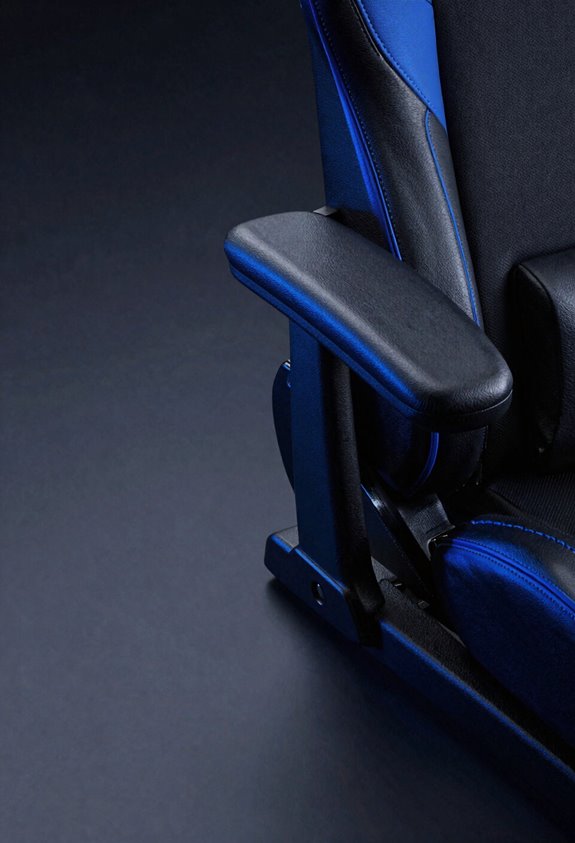
Because your body naturally wants to reach for support, armrests positioned too high force your shoulders into a constant shrug. I know this feels manageable at first, but trust me—it’s exhausting!
When you’re constantly elevating your shoulders, you’re overworking your upper trapezius muscles. This creates shoulder impingement, where muscles and nerves get pinched and irritated. Plus, your body adapts through postural compensation, meaning you’ll unconsciously adjust your posture to cope with the discomfort.
Let’s be real: after hours of this unnatural position, you’ll feel stiffness, neck knots, and persistent tension spreading across your shoulders and upper back. Your muscles are basically working overtime for no reason!
The fix? Adjust those armrests lower so your shoulders can finally relax and your arms rest naturally.
What Happens When Armrests Are Too Low?

On the flip side, armrests that sit too low create their own set of problems—and honestly, they might be even sneakier than high ones!
When your armrests hang too low, your arms dangle without proper support. This forces your shoulders and neck muscles to work overtime, pulling you into an uncomfortable slouch. I’ve found that this posture collapse happens gradually, so you might not notice it at first!
Low armrests also invite uneven leaning, which strains one side of your body more than the other. Over time, this can lead to nerve compression—basically, nerves getting pinched from awkward positioning. Your upper back tightens up, and suddenly you’re battling constant discomfort. Let’s avoid this by keeping armrests at the right height!
How to Find Your Optimal Armrest Height

Finding your perfect armrest height is easier than you’d think—and it’ll transform how your shoulders feel! Here’s my approach: start with postural awareness by sitting normally with your back against the chair. Let your arms relax at your sides naturally. Now, bend your elbows to roughly 90 degrees—that’s your target zone! Your armrests should meet your elbows right there, without forcing your shoulders up or leaving them hanging. Take personalized measurements by checking the distance from your seat to that bent-elbow point. Adjust your armrests so they sit 0–2 centimeters below that sweet spot. Your forearms should rest gently on them, barely touching. That’s it! You’ve nailed ideal height when your shoulders feel relaxed and supported, not tense.
Why Armrest Width and Spacing Matter
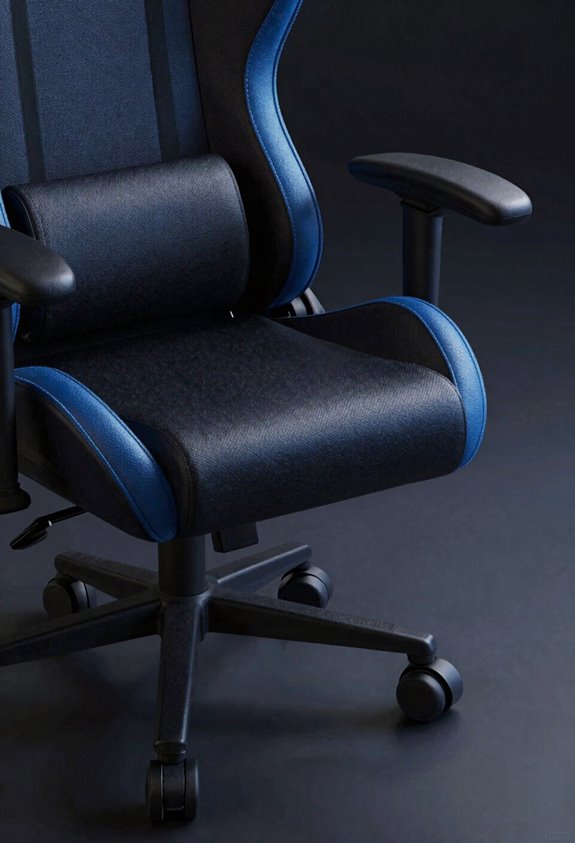
Most people nail the height but then overlook something essential: how far apart their armrests sit! Here’s the truth—armrest spacing dramatically impacts your shoulder clearance and posture symmetry.
I’ve noticed that armrests positioned too close together actually pinch your elbows inward, forcing your rotator cuff muscles to work overtime. That’s not fun! On the flip side, spacing them too far apart makes you hunch or lean sideways to reach them. Neither scenario supports your spine.
Let me share what works: your armrests should sit roughly shoulder-width apart, giving your lateral support without forcing awkward angles. When you’re seated with arms relaxed, they’ll cradle your forearms naturally. This balanced spacing prevents one-sided muscle strain and keeps everything aligned beautifully. Check yours today!
How Proper Support Reduces Muscle Strain
Your upper back stops working so hard, your neck tension melts away, and those nagging knots in your shoulders? That’s what happens with proper armrest support! When your forearms rest at the right height, they carry weight that usually strains your muscles. I’m talking about reducing shoulder and upper back muscle activity markedly. Your spine stays neutral without compensation stress. Here’s my pro tip: incorporate microbreak routines every hour to reset your posture. Use tactile feedback—notice how your armrests should feel like gentle guides, not pressure points. Let’s be real—this simple adjustment transforms your workday! Your body gets the mechanical support it craves, letting those overworked muscles finally chill out and recover.
When Misaligned Armrests Lead to Chronic Pain
While proper armrest support is like a superpower for your muscles, the flip side tells a darker story. When armrests sit too high or too low, your body pays the price! I’ve seen how misaligned armrests trigger chronic pain that builds slowly over weeks. Your shoulders hunch, your neck tightens, and suddenly you’re stuck in a cycle of discomfort.
Here’s what happens: unsupported arms yank on your shoulder muscles continuously. Over time, this creates nerve irritation and persistent tension that doesn’t quit. Workplace ergonomics matters more than you’d think! Proper pain management starts with fixing your armrest height today. Let’s get those armrests adjusted to support your elbows at 90 degrees. Your future self will thank you for taking action now!
Adjustable vs. Fixed Armrests: Which Works Better?
Once we’ve zeroed in on that perfect armrest height, here’s the real game-changer: deciding between adjustable and fixed armrests! I’ll be honest—adjustable armrests win for flexibility. They let you customize height, width, and angle to match your unique body and tasks. Fixed armrests? They’re cheaper upfront, which matters for budget considerations. Here’s the thing: adjustable models reduce shoulder tension because they adapt to different work situations. Sure, fixed armrests look sleek for aesthetic preferences, but they’re one-size-fits-all. I’d recommend adjustable if you can swing it! Your shoulders will thank me later. You’re investing in long-term comfort and injury prevention. That’s worth the extra cost!
Your Step-by-Step Armrest Setup Guide
Let me walk you through the setup process that’ll transform your chair from shoulder-pain central into comfort city!
First, grab your ergonomic checklist and set a setup timer for ten minutes. Sit back with your shoulders relaxed and arms hanging naturally. Adjust armrests so they’re 0–2 cm below your bent elbows—that’s your sweet spot! Your elbows should bend at 90–100 degrees with gentle forearm contact, nothing more.
Next, check the width. Your elbows shouldn’t feel pinched or spread too wide. Adjust length so armrests support your forearms without forcing awkward angles.
Finally, test it! Type or work normally for a few minutes. Feel any shoulder tension? Tweak the height slightly until everything feels naturally supported. You’ve got this!
Frequently Asked Questions
How Long Does It Typically Take to Adjust to Properly Positioned Armrests?
I’ve found that your body’s gentle shift to proper armrest positioning typically takes one to two weeks. During this muscle acclimation and postural recalibration period, I’d recommend patience as tension gradually releases and alignment improves naturally.
Can Armrest Height Affect Typing Speed or Keyboard Work Efficiency?
Yes, I’ve found armrest height directly impacts your typing speed and efficiency. Proper height maintains ideal wrist alignment and typing posture, reducing fatigue and errors. Misaligned armrests compromise both performance and comfort during keyboard work.
Are There Specific Armrest Recommendations for People With Existing Shoulder Injuries?
I’d recommend shoulder friendly rests positioned 0–2 cm below your relaxed elbow height. For injury specific adjustments, you’ll want to prioritize gentle forearm support that doesn’t force upward pressure, allowing your shoulders to relax completely.
How Often Should Armrest Positioning Be Reassessed During the Workday?
I’d recommend reassessing your armrest positioning every 2-3 hours. You can use micro break reminders or sensor-triggered prompts on your device to check if your elbows still rest comfortably at 90-100 degrees without shoulder elevation.
What Role Do Armrests Play in Preventing Repetitive Strain Injuries Long-Term?
I’m convinced that armrests critically curtail cumulative strain by providing proper posture support and even load distribution. They’re essential for sustained shoulder health, reducing repetitive injury risk through consistent forearm support during prolonged work periods.