As an Amazon Associate, we earn from qualifying purchases. Some links may be affiliate links at no extra cost to you. Although our opinions are based on curated research, we haven't used these products. Articles generated with AI.

What Is Hall Effect Technology in Game Controllers and Why Does It Matter

Hall Effect technology swaps worn mechanical contacts for a contactless magnetic sensor in your controller‘s joystick. A tiny magnet tilts with your stick movements, and a sensor detects those magnetic shifts—no friction, no degradation! This means your Xbox Series controller lasts two to three times longer and actually eliminates that frustrating drift problem. You get faster, more precise inputs during gameplay too. Third-party brands like 8BitDo and GameSir already offer these sticks affordably, though most console makers haven’t jumped on board yet. Stick around to discover which controllers have them and whether upgrading makes sense for your gaming style.
Key Takeaways
- Hall Effect uses contactless magnetic sensors instead of mechanical contacts, eliminating friction-related wear and drift.
- Magnetic field detection provides low-latency precision input registration, delivering noticeably improved responsiveness in competitive gameplay.
- Eliminates calibration needs and extends controller lifespan two to three times longer than traditional sticks.
- Third-party manufacturers like 8BitDo and GameSir offer affordable Hall Effect options starting around $50 for wired models.
- Thermal stability maintains consistent accuracy during extended play sessions, reducing need for frequent controller replacements.
Inside Your Controller: How Hall Effect Actually Works
When you move your joystick, you’re actually activating a invisible magnetic dance happening inside your controller! Here’s the magic: a tiny magnet sits beneath your stick, and when you tilt it, the magnet’s orientation shifts. Below that magnet lies a flat Hall Element—a special sensor that detects magnetic field changes. As the magnet moves, it creates different magnetic forces that the Hall Element senses instantly. These magnetic readings get transformed into electrical signals through signal conditioning, which basically means the controller translates those signals into precise numbers your game understands. No wires, no friction, no wearing out! It’s like your joystick’s talking to your game through an invisible magnetic language, delivering perfect accuracy every single time you play!
Why Hall Effect Eliminates Joystick Drift
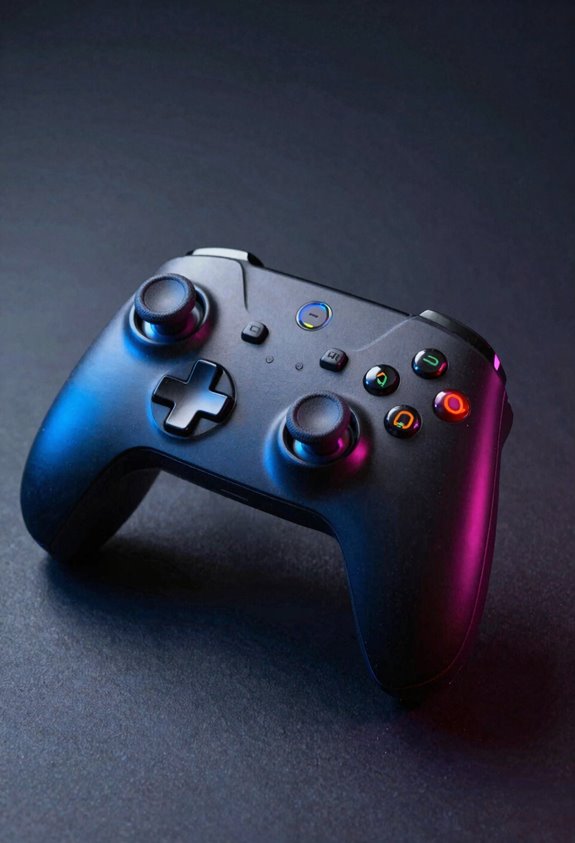
Now that you know how Hall Effect creates that invisible magnetic conversation, let me show you why it totally banishes joystick drift!
Here’s the magic: Hall Effect sticks operate contactless, meaning no physical parts rub together and wear out. Traditional joysticks use moving contacts that gradually degrade, causing that frustrating wobble where your character moves without input.
Since Hall sensors detect magnetic fields instead of relying on degrading mechanical contacts, there’s zero calibration needed! Your stick stays accurate for years without that annoying drift creeping back.
Think of it this way—no touching means no friction, no friction means no wear, and no wear means no drift. You’re basically getting a joystick that stays loyal to you, delivering consistent precision throughout its entire lifespan. That’s gaming peace of mind!
Hall Effect Performance Gains: Accuracy, Speed, Lifespan
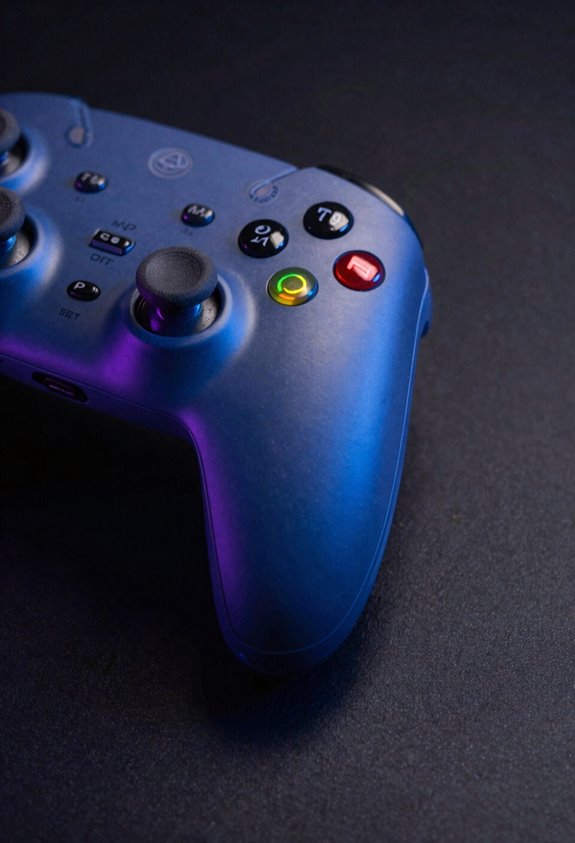
Since Hall Effect sticks eliminate mechanical wear, they deliver three massive performance upgrades you’ll actually feel during gameplay. First, you get low latency precision—meaning your inputs register instantly without lag. Your character responds exactly when you want them to, no delays!
Second, Hall Effect controllers boast thermal stability longevity. They maintain perfect accuracy whether you’re gaming for thirty minutes or eight hours straight. No performance drop as things heat up.
Third, these controllers simply last longer. You’re getting two to three times the lifespan compared to traditional analog sticks. That means fewer replacements and way more money staying in your pocket!
I’m telling you, the difference is absolutely noticeable once you experience it.
Which Controllers Already Have Hall Effect Sticks?
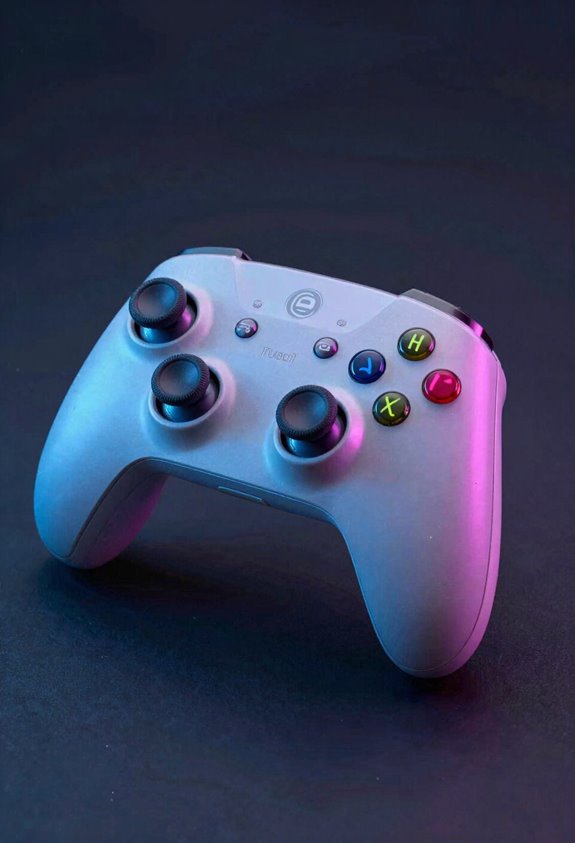
So you’re probably wondering—where can you actually buy a controller with Hall Effect sticks right now?
I’ve got good news! Third party adoption is exploding in the gaming market. You’ll find Hall Effect sticks in controllers like the 8BitDo Ultimate, Nacon Revolution 5 Pro, and GameSir T4 Kaleid. Want something budget-friendly? The GameSir G7 SE Wired runs just $49.99 and works with Xbox!
Here’s the cool part—retro implementations matter too. Way back in 1998, the Sega Dreamcast actually used Hall Effect technology in its singular thumbstick. That’s over twenty years of proven reliability!
Unfortunately, first-party controllers from Nintendo, Sony, and Microsoft still stick with traditional analog sticks. But don’t worry—I expect that’ll change soon as the technology becomes standard across the industry!
Should You Upgrade? Compatibility, Cost, and Use-Case Breakdown
Whether you’re a hardcore competitive gamer or just someone tired of drift ruining your favorite games, upgrading to Hall Effect controllers might be worth your cash. I’d say it depends on your situation! If you play competitively, the precision is a game-changer. Casual players might want to wait for official console versions. Check battery life on wireless models—some last longer than others. Compare warranty coverage too, since Hall Effect sticks come with solid protection. Third-party options like GameSir’s G7 HE Wired cost around fifty bucks, making them affordable entry points. Consider your platform first. Already invested in PlayStation? Maybe hold tight for Sony’s official adoption. Either way, you’re looking at fewer frustrating drift incidents ahead!
The Upgrade Path: Hall Effect Now, Advanced Sensors Later
Now that you’ve figured out whether Hall Effect controllers fit your gaming needs, let’s look ahead at what’s coming next. Here’s the thing: Hall Effect is fantastic, but it’s not the final destination! TMR sensors (that’s Tunneling Magnetoresistance—fancy magnetic tech) represent the next evolution, delivering even sharper precision than Hall Effect offers.
I won’t sugarcoat it—TMR comes with higher sensor cost curves that’ll make your wallet nervous. But here’s where future proofing upgrades matter! You’re not locked into today’s technology forever. Investing in Hall Effect now gives you solid performance while keeping your eyes on tomorrow’s innovations. Think of it as buying a reliable car before upgrading to the luxury model later. Smart gaming means staying ahead without breaking the bank today!
Frequently Asked Questions
Can I Retrofit Hall Effect Technology Into My Existing Controller?
I can’t retrofit Hall Effect into your existing controller because it requires replacing the entire joystick assembly with modular retrofit components and recalibrating sensors—modifications most standard controllers aren’t designed to accommodate.
How Does Hall Effect Compare to Other Emerging Sensor Technologies?
I’d say Hall Effect outperforms optical sensors through superior durability and simpler design, though magnetic encoders offer comparable reliability. Both technologies eclipse traditional potentiometers, but Hall Effect remains the most cost-effective solution for you right now.
Are Hall Effect Controllers Compatible With All Gaming Platforms?
I’d say Hall Effect controllers aren’t universally compatible across all platforms. You’ll find cross platform support varies—some work with multiple systems through firmware compatibility, while others remain platform-specific due to proprietary requirements.
What Is the Typical Price Difference Between Hall Effect and Standard Controllers?
I’d say you’re looking at a price premium of $20-$50 more upfront, but you’ll recoup that through long-term savings since Hall Effect controllers last two to three times longer than standard ones.
Will First-Party Console Manufacturers Adopt Hall Effect in Upcoming Hardware Releases?
I believe first-party adoption’s inevitable, though manufacturing timelines remain uncertain. Sony, Microsoft, and Nintendo will likely integrate Hall Effect into next-gen consoles or hardware revisions, but they’re moving cautiously compared to third-party manufacturers.