As an Amazon Associate, we earn from qualifying purchases. Some links may be affiliate links at no extra cost to you. Although our opinions are based on curated research, we haven't used these products. Articles generated with AI.

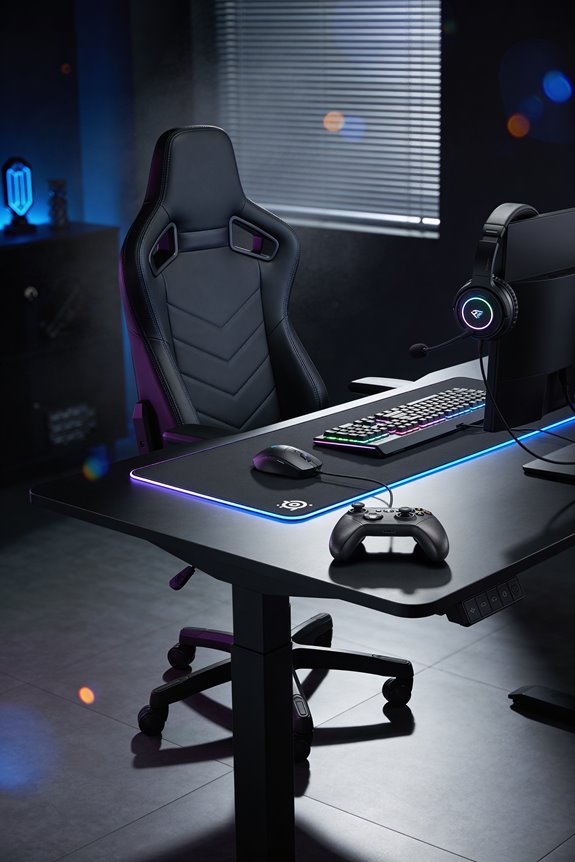
The Difference Between Racing-Style and Office-Style Gaming Chairs Explained

Racing-style chairs look amazing with their bold colors and bucket seats, but they’re honestly built for short gaming marathons, not all-day desk work. Office chairs? They’ve got adjustable lumbar support, flatter seats that let your hips move freely, and ergonomic features that keep your spine happy during eight-hour workdays. So pick racing if you’re streaming for fun, grab office if you’re grinding at a desk. Stick around to discover which chair actually matches your daily life!
Key Takeaways
- Racing-style chairs feature tight bucket seats restricting hip movement, while office chairs use flat seat pans allowing natural spine alignment and position shifts.
- Office chairs include height-adjustable lumbar support and 4D armrests; racing chairs rely on fixed pillows, limiting customization for extended work sessions.
- Racing aesthetics signal gaming environments; office-style designs blend professionally, supporting task-focused productivity and workplace integration.
- Racing chairs prioritize deep recline for relaxation; office chairs use synchro-tilt mechanisms preserving proper posture during typing and mouse work.
- Office chairs maintain better resale value and offer superior durability features, making them cost-effective long-term investments versus trend-dependent gaming chairs.
Gaming Chair vs. Office Chair: Which Actually Fits Your Life?
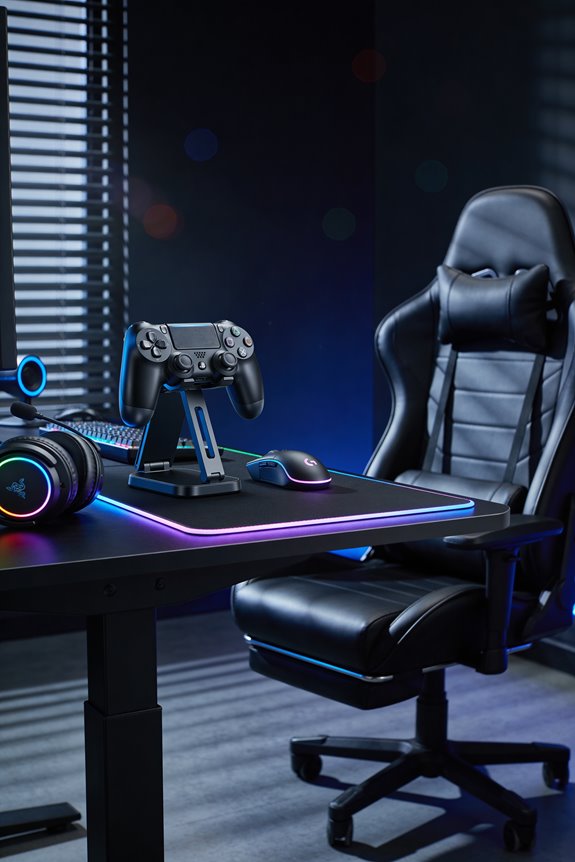
When you’re trying to pick between a gaming chair and an office chair, here’s the real deal—it all comes down to what you’re actually doing in that seat! I’m talking about your daily routine and comfort needs. Gaming chairs rock that racing vibe with bold colors and bucket seats, perfect for intense gaming marathons. But here’s the thing: if you’re working eight hours straight, you’ll want an office chair instead. Office chairs nail seat ergonomics with adjustable features that support your back during long workdays. Gaming chairs prioritize that immersive feel over practical support. Plus, material durability matters—office chairs are built tough for daily desk life, while gaming chairs excel at short, exciting sessions. Pick based on your lifestyle!
Structure and Body Impact: Why Bucket Seats Backfire at Desks

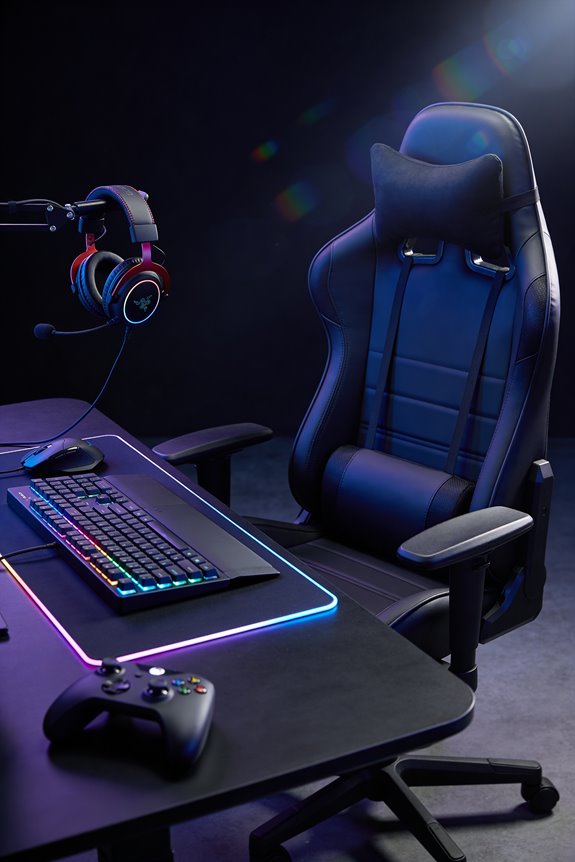
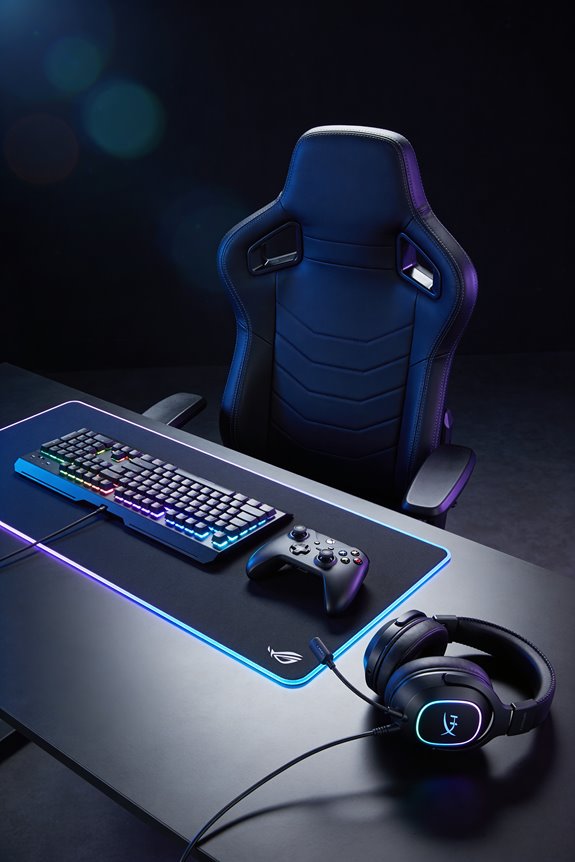
Now let’s talk about the real problem with bucket seats—they’re built like race car shells, not desk thrones! You see, racing-style chairs have hard side bolsters that hug your hips tightly. This design keeps you planted during high-speed turns, but here’s the catch: it creates a lumbar mismatch when you’re sitting at a desk for hours.
When those bolsters restrict your hip rotation, your lower back can’t adjust naturally. Your spine gets twisted into uncomfortable angles. Meanwhile, office chairs feature flatter seat pans that let you move freely. They’re designed so your hips can rotate and shift positions without fighting the chair’s structure.
I’m telling you—that restriction leads to real pain and posture problems during work sessions!
Ergonomic Adjustments That Matter for Long Sitting

Since you’re about to spend hours at your desk, you’ve got to dial in your chair’s adjustments right from the start! Let me break down what actually matters.
First, lumbar adjustability is your back’s best friend. Office chairs feature height-adjustable dynamic lumbar systems that support your spine’s natural curve—way better than gaming chair lumbar pillows that don’t adapt.
Next, seat depth lets you customize how far back you sit. This prevents your thighs from getting crushed against the edge!
Your arm rests should glide forward and backward with 4D adjustment. This keeps your shoulders relaxed while typing.
Finally, the tilt mechanism matters! Office chairs use synchro-tilt recline, where your backrest moves more than your seat. This maintains proper posture angles during those marathon work sessions.
Recline Depth: When Deep Tilt Works and When It Fails

that extreme tilt totally fails when you’re trying to get work done! Here’s the thing: deep recline feels amazing for relaxing during gaming sessions. You’re stretched out, immersed, totally comfortable for short bursts. But here’s where task misalignment kicks in—when you need to type, click, or focus on a monitor, that reclined position wrecks your productivity. Your arms can’t reach your keyboard properly, and your neck strains upward constantly. Office chairs use synchro-tilt instead, which lets you lean back while keeping your body aligned with your desk. The back moves further than the seat, maintaining healthy angles for work. So I’m telling you: gaming chairs’ deep recline rocks for relaxation, but it’s terrible for actual tasks!
Aesthetics and Your Space: Why Looks Affect Productivity

Beyond just how your chair reclines, here’s something we often overlook: your chair’s looks actually shape how you work and feel! I’ve noticed that a bright racing chair with bold logos creates visual hierarchy in your space—it screams “gaming zone!” But here’s the thing: that same chair in your office sends mixed signals about productivity.
Your environment’s mood lighting matters too. With soft, professional lighting, an office chair blends seamlessly and keeps you focused. A gaming chair, though? It demands attention and pulls your mind toward relaxation mode.
Let me be real: I’m not saying looks don’t matter for gaming setups. They absolutely do! Just remember—your chair’s aesthetic should match your space’s vibe. Choose the style that makes you feel ready to crush your actual goals!
The Price Reality: What You Pay for Style vs. Function
Let me break down what you’re actually spending money on when you pick your chair. Racing-style chairs cost more because of flashy material costs—that branded stitching, bold colors, and logo printing add up! You’re paying for aesthetics that won’t help your back during eight-hour workdays.
Office chairs? They’re similarly priced but packed with functional adjustments instead. Think lumbar support systems and 4D armrests that actually improve your posture. Here’s the thing: racing chairs lose resale value fast since gaming trends shift constantly. Office chairs hold their worth better because businesses always need professional seating.
I’d say invest in function over flash. Your back—and your wallet long-term—will thank you!
Gaming Session Scenarios Where Gaming Chairs Win
I get it—we just talked about how office chairs give you better bang for your buck overall. But here’s where gaming chairs shine! When you’re settling in for marathon streaming comfort during a twelve-hour stream, those deep reclines and thick padding actually matter. You’re not moving much anyway, so that bucket seat design keeps you locked in place perfectly.
Plus, party sessions with friends? Gaming chairs create that immersive vibe that makes everyone jealous. The bold colors and racing aesthetics set the mood way better than boring grey office furniture ever could.
For short, intense gaming bursts where you’re fully focused, gaming chairs deliver pure excitement. You’re trading long-term ergonomics for immediate immersion and style—and sometimes that’s exactly what you need!
Office Work and Why Gaming Chairs Create Problems
Now that you know gaming chairs rock for marathon sessions, let’s talk about why they’re basically your worst enemy at the office!
Here’s the thing: gaming chairs’ hard side bolsters restrict your movement, making desk work genuinely uncomfortable. You can’t shift positions freely like you need to during an eight-hour workday. Those bucket seats also push you into awkward angles that cause wrist strain and poor screen distance positioning. Your arms won’t align properly with your keyboard and monitor setup!
Plus, the heavy padding creates thermal buildup during long hours, leaving you sweaty and distracted. Gaming chairs lack the adjustable features—like 4D armrests and dynamic lumbar support—that office chairs offer. And that deep recline? Terrible for productivity and foot circulation when you’re stuck in one spot!
Trust me, your body will thank you for choosing an office chair instead!
Budget Tiers and What Each Chair Type Delivers
Most of us don’t have unlimited cash for a fancy chair, so let’s break down what you’re actually getting at different price points!
In budget tiers under $300, gaming chairs skimp on padding and use cheaper fabric. Office chairs at this level offer better adjustments, though materials feel less premium. Mid-range gaming chairs ($300–$600) feature decent stitching and logos, but material tradeoffs mean less durability. Office chairs here shine with superior lumbar support and longer-lasting upholstery.
Premium gaming chairs ($600+) deliver quality materials and flashy designs. However, office chairs at similar prices crush them on warranty differences and adjustability options. Here’s the real talk: office chairs hold resale value better because they’re versatile for any workspace. Gaming chairs depreciate faster since fewer buyers want that racing aesthetic later!
Frequently Asked Questions
Can Gaming Chair Bucket Seats Cause Long-Term Spinal Alignment Issues With Daily Use?
Yes, I’d say gaming chair bucket seats can cause long-term spinal alignment issues. Their hard side bolsters restrict movement, and the seat pan doesn’t accommodate proper thigh support, promoting poor posture during daily use and bucket deformation over time.
Do Office Chair Armrests Work With Gaming Setups Like Consoles or Racing Simulators?
I’d say office chair armrests don’t work well with gaming—they’re like trying to use a telegraph for streaming. Their 4D adjustability lacks the armrest customization racing chairs offer, and console compatibility suffers without bucket seat positioning.
How Do Gaming Chair Lumbar Pillows Compare to Dynamic Lumbar Adjustment Systems?
Gaming chair lumbar pillows offer fixed adjustable support through removable memory foam, while dynamic systems actively adapt to your spine’s movements. I’d say dynamic adjustment provides superior long-term comfort.
Are Gaming Chairs Suitable for Hybrid Work Environments Mixing Office and Gaming Time?
Gaming chairs aren’t ideal for hybrid work because I’d struggle with ergonomic shifts between tasks. Their bucket seats and limited adjustability complicate space management when alternating between professional work and gaming sessions.
Which Chair Type Better Accommodates Different Body Sizes and Sitting Positions Throughout Day?
One size doesn’t fit all, and I’d tell you office chairs win here. They’ve got adjustable widths and handle posture variability better throughout your day than gaming chairs’ restrictive bucket seats.