As an Amazon Associate, we earn from qualifying purchases. Some links may be affiliate links at no extra cost to you. Although our opinions are based on curated research, we haven't used these products. Articles generated with AI.

The Science Behind Haptic Feedback in Modern Controllers

When you grip a modern controller, tiny motors and sensors are basically playing tricks on your skin! These actuators vibrate at precise speeds, sending signals that your nerves interpret as texture, resistance, and pressure—even though nothing’s physically there. Your body’s touch receptors can’t tell the difference between real and simulated sensations. Different motor types like LRAs deliver nuanced feedback way better than older models. Stick around to discover how engineers pack this magic into your hands!
Key Takeaways
- Haptic feedback communicates through direct skin contact via cutaneous receptors, transmitting meaning through vibration timing and patterns rather than sound or visuals.
- Modern controllers use different actuator types—ERM (spinning weights), LRA (electromagnetic), and piezoelectric—each offering varying levels of nuance and frequency response capabilities.
- DualSense controllers employ voice coil actuators in grips for detailed vibrations and adaptive triggers with DC motors that create variable resistance sensations.
- Sensors detect in-game events and coordinate motor timing to create tactile illusions by combining multiple data points through sensor fusion.
- High-definition haptics use high-density actuators and precise vibration pattern programming to deliver convincing, nuanced feedback that enhances immersion and presence.
What Makes Haptic Feedback Different From Sound and Visuals
While sound and visuals grab your eyes and ears, haptic feedback speaks directly to your skin—and that’s what makes it so special! See, I think tactile semantics is where the real magic happens. Your skin understands vibrations and pressures in ways your brain processes instantly. Let me explain: temporal coding means the timing and pattern of vibrations convey meaning. A quick pulse feels different from a sustained rumble, right? Sound travels through air, visuals through light, but haptics? They’re physical sensations touching you directly. I’ve noticed this makes feedback feel more immediate and personal. Your skin’s got thousands of nerve receptors waiting to be stimulated. That’s why I love haptic tech—it creates immersive experiences that sound and visuals simply can’t match alone!
How the Body Detects Haptic Sensations
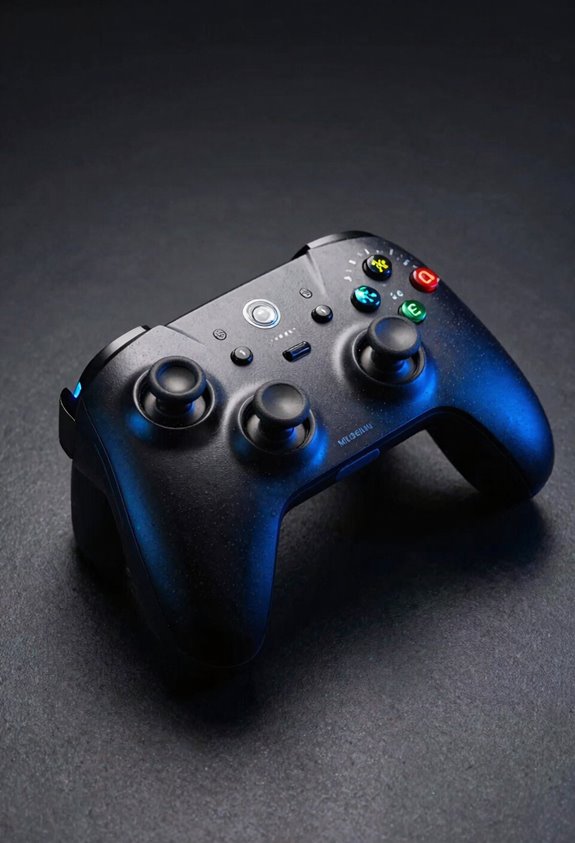
Now that you know how haptic feedback differs from sound and visuals, let’s explore the amazing way your body actually detects these sensations! Your skin contains specialized touch detectors called cutaneous receptors. These tiny sensors pick up vibrations, pressure, and movement when your controller buzzes or pushes back! They’re basically your body’s built-in alarm system for tactile information. Here’s the cool part: your brain doesn’t just feel vibrations in isolation. It combines cutaneous receptor signals with proprioceptive integration—your body’s awareness of position and movement in space. Together, these systems create that immersive sensation you feel when gripping a controller. Your nervous system processes everything simultaneously, making haptic feedback feel natural and intuitive! That’s why rumbling, resistance, and texture feedback feel so real!
How Motors and Sensors Create the Illusion of Touch
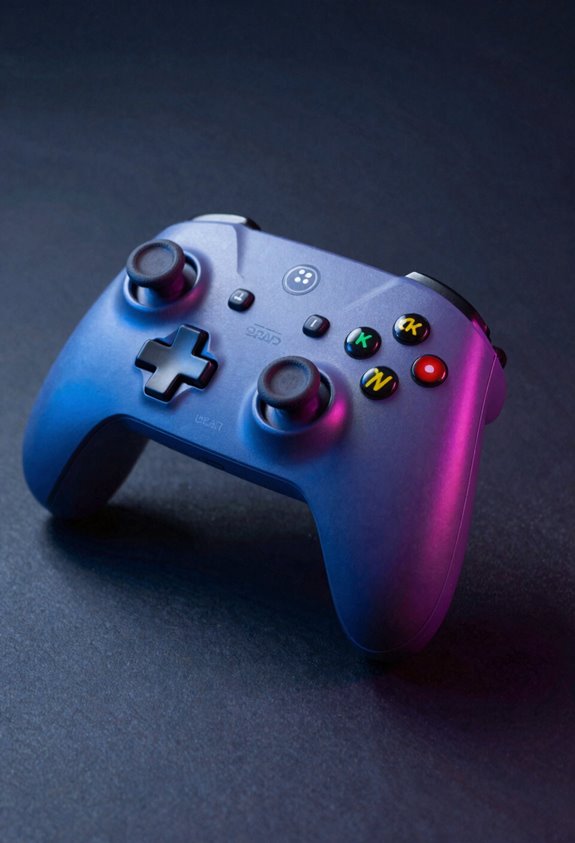
Here’s where the magic really happens—controllers trick your brain into feeling things that aren’t actually there! Let me break down how this works. Inside your controller, motors spin at precise speeds through motor timing—coordinating exactly when vibrations hit your fingers. Meanwhile, sensors detect what’s happening in the game, sending signals that tell the motors how to respond. This sensor fusion combines multiple data points, so your brain receives realistic feedback! When you’re racing, the motor vibrates differently than during a gunfight. Your skin receptors can’t tell the difference between real texture and these carefully timed vibrations. It’s basically your controller and your nervous system working together, creating sensations that feel genuinely authentic. Pretty wild, right?
ERM vs. LRA Actuators: Which Wins?
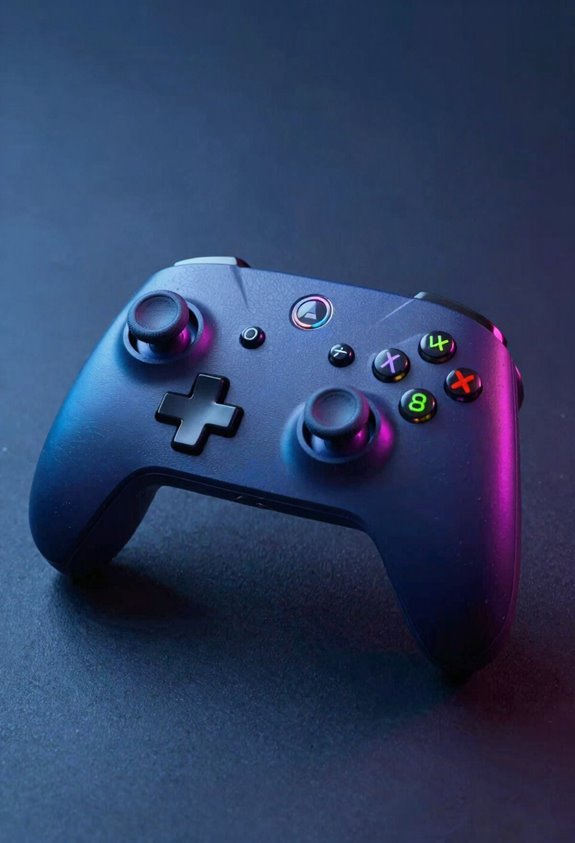
Since we’ve seen how motors create those convincing touch sensations, let’s dig into the real showdown: ERM versus LRA actuators!
Here’s the deal: ERM actuators use spinning weights that wobble around, creating vibrations. They’re cheap and reliable, but honestly? They’re kind of one-trick ponies. LRA actuators, though, use electromagnetic circuits for way better resonant efficiency. They deliver precise, controlled vibrations that feel more realistic!
When we talk frequency response, LRAs crush ERMs. They handle rapid pattern changes effortlessly, creating nuanced feedback that ERMs can’t match. Think of it this way: ERMs are like old rumble packs, while LRAs are the fancy new tech!
For gaming and VR, LRAs win hands down. They’re faster, smoother, and honestly? They make experiences feel incredibly immersive. Your PlayStation 5 uses them for a reason!
Piezoelectric Tech Reshapes Next-Gen Controllers
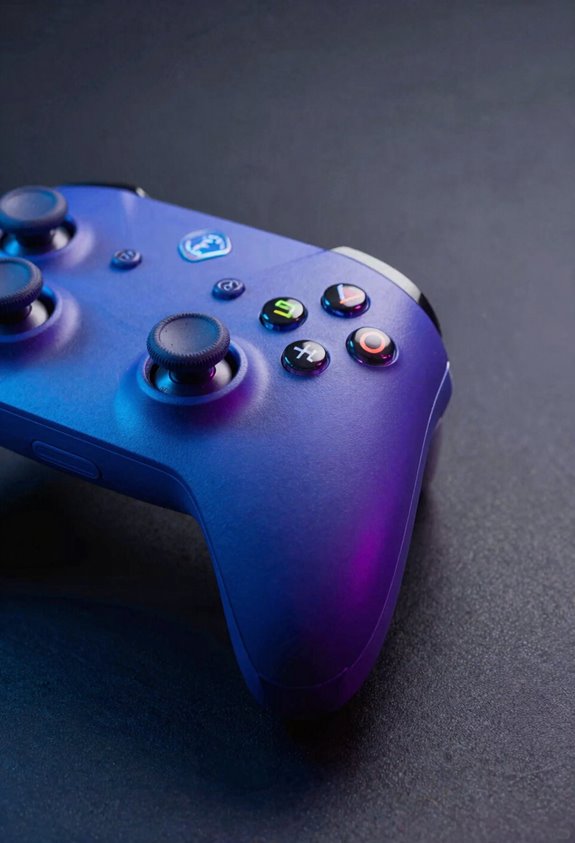
While LRAs dominate today’s controllers, there’s a new player entering the arena that might just change everything! I’m talking about piezoelectric actuators, and they’re genuinely impressive.
Here’s why I’m excited: piezo tech creates vibrations without moving parts, meaning less wear and tear. Let’s talk miniaturization—these tiny devices pack serious power into incredibly small spaces. Your next controller could be slimmer and lighter!
Voltage optimization is another game-changer. I’ve learned that piezo systems use electrical pulses to vibrate crystal materials, delivering precise feedback with minimal energy waste. They’re roughly ten times more efficient than traditional motors!
What really gets me is the sensation range. These actuators can produce subtle, nuanced feedback that feels incredibly realistic. Your fingertips will detect differences you’ve never experienced before!
Why DualSense Raised the Haptic Bar
When Sony’s DualSense controller hit the market, it didn’t just improve haptics—it completely transformed what we expect from gaming feedback. I’ll tell you why: adaptive immersion became real through voice coil actuators nestled in the grip. These tiny motors deliver incredibly detailed vibrations that match exactly what’s happening on-screen. But here’s the game-changer—adaptive triggers! They use DC rotary motors to create physical resistance. Drawing a bow? You’ll feel the tension building. Gun jamming? The trigger fights back! Let me be honest: this isn’t just vibration anymore. It’s your controller becoming part of the story. These trigger mechanics make you actually *feel* what your character experiences. That’s why we can’t go back to standard rumble!
Adaptive Triggers: The Science of Simulated Resistance
If you’ve ever wondered why your DualSense trigger actually pushes back against your finger, I’ve got the scoop! Here’s the magic: tiny DC rotary motors inside each trigger create variable impedance—fancy talk for changing resistance levels. When you’re firing a gun in-game, the trigger gets stiffer. Drawing a bow? It gradually resists more. These motors adjust instantly with minimal tactile latency, meaning you feel the feedback almost immediately, no annoying delays! The science is brilliant because it tricks your brain into believing you’re really handling these objects. Let me break it down: the controller’s computer reads what’s happening in the game, tells the motor how much to resist, and boom—you get authentic simulated resistance. It’s genuinely immersive stuff that completely changes how you experience gaming!
Haptic Feedback Across Gaming, VR, and Automotive Systems
Beyond those adaptive triggers we just talked about, haptic feedback‘s real magic shows up across three major worlds: gaming, VR, and cars! In gaming, I’m talking about feeling sandstorms or rain through your controller—it’s wild! VR takes things further with VR gesture mapping, letting you sense virtual objects in your hands like they’re actually there. You’re physically touching something that doesn’t exist, which blows my mind every time. Now, cars? That’s where tactile vehicle controls shine. Touchscreens give you vibration feedback so you don’t need to look down. Steering wheels buzz warnings about obstacles nearby. It’s all about keeping your focus on the road while staying connected to your vehicle. Pretty cool, right?
Engineering High-Definition Haptic Precision
Building truly immersive haptic experiences demands we push beyond basic vibrations and dial in the precision that makes players’ hearts race! I’m talking about high-definition haptics that actually feel *real*.
Here’s the deal: modern controllers use high density actuators—tiny motors packed tightly together—to create incredibly detailed sensations. Think of it like this: instead of one big rumble, you’ve got multiple precise vibrations working in harmony.
Let me break down tactile rendering, which is fancy speak for “creating touch feelings.” We program specific vibration patterns that match exactly what’s happening on screen. Sandstorms feel gritty. Gunfire feels sharp. Your fingers genuinely believe they’re experiencing something real!
I’ve noticed this tech separates amazing games from forgettable ones. That precision? It’s pure magic for immersion!
The Future of Haptic Technology: What’s Coming Next?
As haptic tech keeps evolving, we’re standing on the edge of something seriously cool! I’m talking about brain-computer interfaces that’ll let you feel virtual objects directly in your mind. Imagine controlling games with just your thoughts while getting realistic touch sensations back!
Wearable patches are another game-changer I’m excited about. These tiny, flexible devices stick to your skin and deliver precise vibrations anywhere on your body. They’re perfect for fitness apps, medical training, or immersive entertainment.
Soon, we’ll see haptic suits becoming affordable for everyday gamers. Plus, haptic feedback in VR will get so realistic you’ll forget what’s real! Let’s watch this technology transform how we experience digital worlds.
Frequently Asked Questions
How Much Power Do Haptic Actuators Consume Compared to Traditional Controller Feedback Systems?
I’ll gently illuminate that piezo actuators consume markedly less energy than traditional systems. Modern haptic actuators’ efficiency metrics show they’re considerably gentler on battery draw. Different actuator types vary—piezo systems prove ten times more efficient, maximizing longevity.
Can Haptic Feedback Cause Skin Irritation or Health Issues With Prolonged Use?
I’ve found that prolonged haptic use rarely causes issues, though you might experience skin hypersensitivity or contact dermatitis if you’re sensitive to sustained vibrations. I’d recommend taking breaks during extended gaming sessions to minimize potential irritation.
What’s the Latency Between Game Action and Haptic Response in Modern Controllers?
Have you wondered why your controller responds instantaneously? I’ve found modern systems achieve minimal reaction delay—typically under 20 milliseconds—with temporal resolution fine enough that you’ll perceive haptic feedback synchronized perfectly to on-screen events.
How Do Developers Program Custom Haptic Patterns for Different Game Scenarios?
I program custom haptic patterns through pattern scripting, defining frequency and intensity values for each game scenario. Context mapping lets me link specific in-game events—like weapon recoil or environmental effects—to corresponding tactile responses automatically.
Are Haptic Feedback Systems Compatible Across Different Gaming Platforms and Devices?
You’ve just plugged your controller into a different console, hoping your custom haptics work—they don’t. That’s because I’d say cross-platform interoperability remains limited; proprietary ecosystems like PlayStation’s and Xbox’s keep haptic patterns locked within their own gardens.