As an Amazon Associate, we earn from qualifying purchases. Some links may be affiliate links at no extra cost to you. Although our opinions are based on curated research, we haven't used these products. Articles generated with AI.


How Hall Effect Sensors Work and Why They Are Replacing Potentiometers in Controllers

Hall effect sensors in modern controllers are basically friction-free wizards that detect magnetic fields without moving parts! Instead of a scratchy wiper sliding around like potentiometers do, they use the Lorentz force to measure field strength electronically. No wear means they last way longer than old pots in an Xbox Series X controller and work in dusty, hot environments where potentiometers quit. Throttles, drones, and controllers now use them for precise, maintenance-free performance. Stick around to discover which sensor type matches your project perfectly!
Key Takeaways
- Hall Effect sensors detect magnetic fields through the Lorentz force on charge carriers, enabling contactless position and intensity measurements without moving parts.
- Potentiometers fail due to wiper wear causing scratchy signals and thermal drift, while Hall sensors maintain durability through non-contact operation and minimal maintenance.
- Linear Hall sensors provide precise analog output for continuous measurements, whereas digital Hall sensors offer binary detection suitable for simple threshold applications.
- Hall Effect sensors resist mechanical wear, thermal cycling, dust, and vibration, delivering longer operational lifespan in harsh automotive, drone, and industrial environments.
- Modern controllers use Hall sensors for throttle pedals, gimbal rotation, and RPM detection by eliminating friction-based degradation that requires frequent potentiometer recalibration.
Why Potentiometers Fail: The Case for Hall Effect Sensors
When you’ve got a device that relies on a sliding contact to measure position or volume, you’re basically betting against time itself! Here’s the thing: potentiometers wear out because friction slowly destroys their internal wiper. That mechanical contact degrades with every adjustment you make. Eventually, you’ll notice scratchy sounds, intermittent signals, or complete failure. Plus, thermal drift affects their accuracy—temperature changes make readings shift unexpectedly. Signal calibration becomes a constant headache as the sensor drifts. Hall Effect sensors? They’re contactless! No wipers means zero mechanical wear. They work in harsh environments without breaking down. I’m telling you, they’re game-changers for reliable, long-lasting controllers. No more replacing worn-out potentiometers every few years!
Recommended Products

【Ultimate Performance】Powered by the Ryzen AI Max+ 395 processor with 16 cores, 32 threads, and integrated Radeon 8060S graphics (40 CUs). The OneXFly Apex delivers desktop-grade gaming performance in a handheld device. Enjoy seamless AAA gaming and handle intensive AI tasks with ease.
![LANRUO GPD Win Mini 2025 [AMD AI 370-32GB+2TB] 7 Inches Mini Handheld Win 11 PC Game Console Gameplayer 1920X1080 Touchscreen Laptop Tablet PC (Black, AI 370-32GB+2TB)](https://m.media-amazon.com/images/I/511cR8FFHwL._SL500_.jpg)
GPD Win Mini 2025's CPU: AMD Ryzen A1 9 HX-370 processor, 12 Cores/24 Threads. Base Frequency 2 GHz Max Turbo Frequency Up to 5.1 Ghz Graphics: AMD Radeon 780M RNDA3 Graphics card. graphics framework 12 graphics cores / 2700 MHz graphics Frequency.

SMART HYBRID HAMMER ACTION KEYS: The Smart Hybrid Hammer Action Keyboard offers highly expressive playing from soft to forceful touch.The 88-Key Digital Scaling technology controls volume individually for each key in response to how hard it is played, with the touch weight varying along the length of the keyboard, like a grand piano.
How Hall Effect Sensors Detect Magnetic Fields

Imagine this: a tiny semiconductor chip detects magnetism without ever touching anything—that’s the Hall Effect in action! Here’s how it works: I apply an electric current through a thin semiconductor slab while a magnetic field pushes perpendicular to it. The magnetic flux causes electron deflection—pushing charge carriers to one side of the chip. This creates a voltage difference we can measure! The stronger the magnetic field, the more electrons deflect, generating a bigger voltage signal. Unlike potentiometers that wear out from friction, I’m measuring magnetism through pure physics. No moving parts needed! This makes Hall sensors incredibly reliable for detecting magnetic fields in tight spaces. Pretty cool, right?
Linear vs. Digital Hall Sensors: Which Should You Choose?
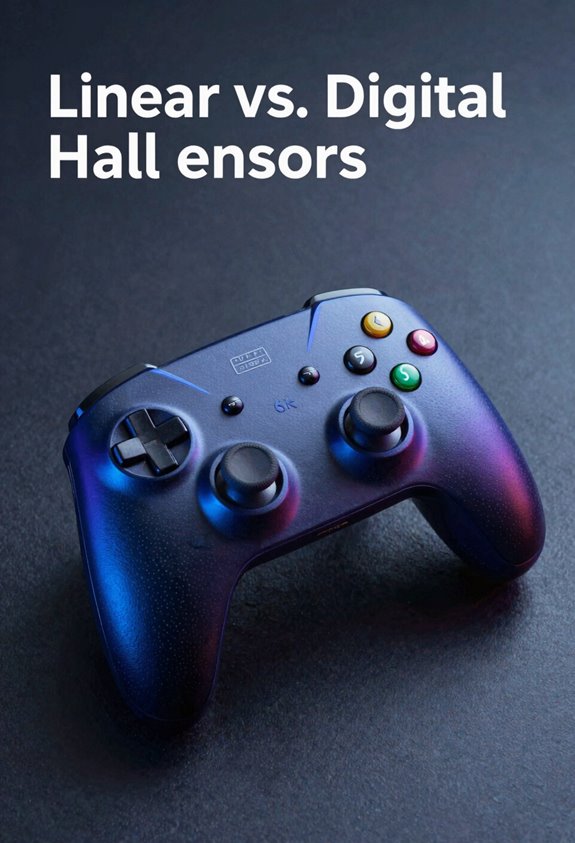
Now that you understand how Hall sensors detect magnetism, here’s the real decision: linear or digital?
Linear sensors give you an analog range of outputs that change smoothly as the magnetic field gets stronger or weaker. Think of it like a volume knob—you get every position in between! These are perfect when you need precise measurements of field strength.
Digital sensors, though? They’re all-or-nothing players! They flip between on and off states using something called switch hysteresis. This fancy term just means they have two trigger points—one to turn on, one to turn off—preventing annoying bouncing.
Choose linear if you’re measuring intensity. Pick digital for simple presence detection. Your application determines which wins!
Recommended Products

Raptor HE Gaming Switch—an advanced innovation designed for precision and speed. Featuring advanced Linear mechanics and integrated Hall Effect technology, this switch delivers lightning-fast and precise keystroke responses.

Angle sensor outer diameter is only 22mm and 6mm shaft

【Quality Materials】: Our Hall Effect Sensor is made of high-quality materials, ensuring durability and reliability for long-term use. Trust in hall angle sensor ability to withstand demanding industrial environments.
The Durability Advantage: Non-Contact Operation Eliminates Wear
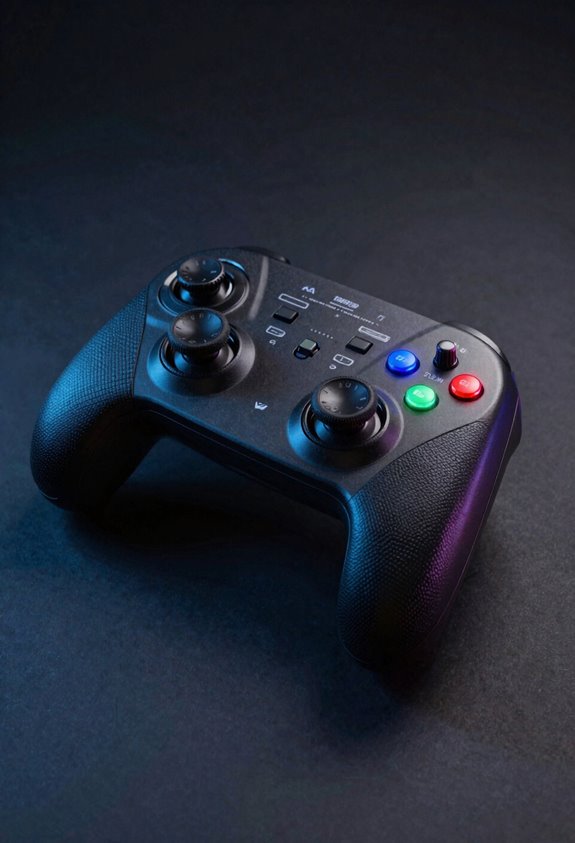
While a potentiometer’s wiper gets worn down after thousands of uses, your Hall sensor keeps working perfectly because nothing’s actually moving or grinding against it. I love this feature because it means zero mechanical wear! Let me explain: potentiometers rely on contact between parts, which creates friction and degradation over time. Hall sensors? They’re completely non-contact, using invisible magnetic fields instead. Your magnet alignment stays consistent through thermal cycling—temperature changes that would mess with other sensors. I’m talking about extreme heat swings that don’t faze Hall sensors one bit. This means your controller lasts longer, performs reliably in harsh conditions, and requires virtually no maintenance. You’re basically getting a sensor that laughs at wear and tear!
Real-World Applications: Where Hall Sensors Replace Potentiometers

When you pop open your car’s hood or look inside industrial machinery, you’ll spot Hall sensors doing jobs that potentiometers used to handle—and doing them way better! Let me show you why they’re winning everywhere. In your automotive throttle, Hall sensors detect exactly how far you’re pressing the gas pedal without any wear. They’re super reliable because there’s zero contact between moving parts. Then there’s drone gimbals—those fancy camera stabilizers need precision, and Hall sensors nail it every time! They measure rotation smoothly and never get tired like old potentiometers did. I’m telling you, once you go contactless, there’s no going back. These sensors just keep working, year after year, no complaints!
Recommended Products
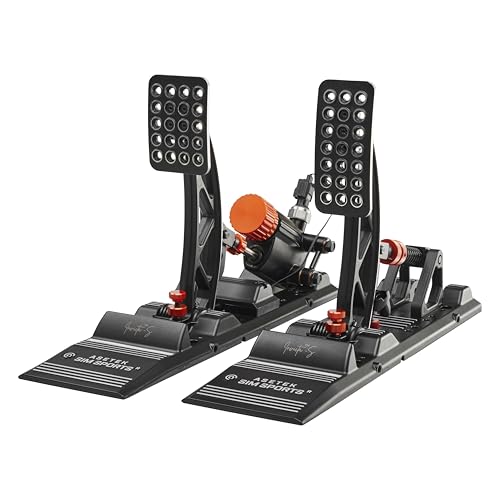
Realistic Hydraulic Feedback: The T.H.O.R.P. II (Twin Hydraulic Opposing Rapid Pistons) System is Asetek SimSports’ updated hydraulic brake cylinder which gives you the ultimate experience of driving a real racecar.

Direct replacement - this 100% new electronic throttle body is designed to match the fit and function of the original equipment throttle body on specified vehicles

Advanced sensors: Contactless Hall sensors on both clutch and throttle for high precision and durability
Precision Measurement Without Friction: Speed, Position, and RPM
Measuring motion without any friction or wear—that’s where Hall sensors absolutely shine! I’ll show you why they’re gaming changers for speed and RPM detection.
Here’s the magic: Hall sensors give you frictionless feedback because nothing physically touches anything else. No brushes wearing out, no potentiometer wipers grinding down. Your sensor sits nearby while a magnet spins past it, creating electrical signals that tell you exactly what’s happening.
With magnetic calibration, you get dead-accurate readings every single time. Whether you’re tracking wheel speed, engine RPM, or motor position, Hall sensors deliver precision that potentiometers simply can’t match. They measure motion continuously and reliably, never degrading from repeated use. Let me tell you—that’s the future of motion sensing right there!
Implementation Considerations: Retrofitting Controllers With Hall Sensors
Now that you’ve got the performance benefits down, let’s talk about actually putting Hall sensors into your existing setups! First, you’ll need to check your PCB footprint—basically, the physical space where components sit. Make sure your Hall sensor fits without squeezing other parts awkwardly.
Next, magnet polarity matters big time! You’ve got to match your magnet’s north or south pole correctly, or your sensor won’t trigger properly. I’d recommend testing before permanently mounting anything.
Also, consider your wiring carefully. Hall sensors need clean power and proper grounding to avoid false signals from electrical noise.
Finally, adjust your sensor gap distance for best results. Get it right, and you’re golden!
Lifespan Advantage: How Hall Sensors Outlast Potentiometers
Once you’ve got your Hall sensor installed and running smoothly, here’s where things get really exciting—you’re looking at a sensor that’ll outlive your potentiometer by years! Here’s why: potentiometers use wipers that slide across a surface, wearing down with every movement. Eventually, that friction causes failure. Hall sensors? They’re contactless reliability at its finest—nothing actually touches anything! No moving parts means no wear and tear. Your longer lifespan translates to fewer replacements and less maintenance headache for you. I’m talking about sensors that keep performing in dusty, vibration-heavy environments where potentiometers would quit. Let’s be honest: that’s a game-changer for any controller system!
Frequently Asked Questions
What Semiconductor Materials Are Commonly Used in Hall Effect Sensors, and How Do They Differ?
I’ll explain the semiconductor materials commonly used. You’ll find silicon sensors, gallium arsenide, indium antimonide, and indium arsenide in Hall effect designs. They’re chosen based on sensitivity requirements and operating temperature ranges for your specific application.
How Do Schmitt Triggers in Digital Sensors Prevent False Switching and Contact Bounce Issues?
I’ll explain how Schmitt triggers prevent false switching. They use threshold hysteresis with two distinct voltage levels—one for activation, another for deactivation. This debounce mechanism eliminates noise-induced chatter. My Schmitt optimization strategy guarantees clean shifts without contact bounce issues.
Can Hall Effect Sensors Detect Both Static and Dynamic Magnetic Fields Simultaneously?
Picture a sensor responding instantly to every magnetic whisper around it. I’ll tell you—yes, Hall effect sensors detect both static detection and dynamic filtering simultaneously, responding to constant fields and changing magnetic conditions without compromise.
What Is the Typical Output Voltage Range From Raw Hall Elements Before Amplification?
Raw Hall elements typically produce low millivolt outputs—often just microvolts to a few millivolts. I’d note their high impedance output requires built-in amplifiers to boost these weak signals into usable voltage levels for practical applications.
How Should Sensor-To-Magnet Gap Distance Be Optimized for Reliable Detection in Industrial Applications?
I’d optimize your air gap by maintaining 0-5mm spacing while accounting for thermal drift variations. Consider an automotive crankshaft sensor: you’ll need consistent positioning to prevent false readings during engine temperature fluctuations.